
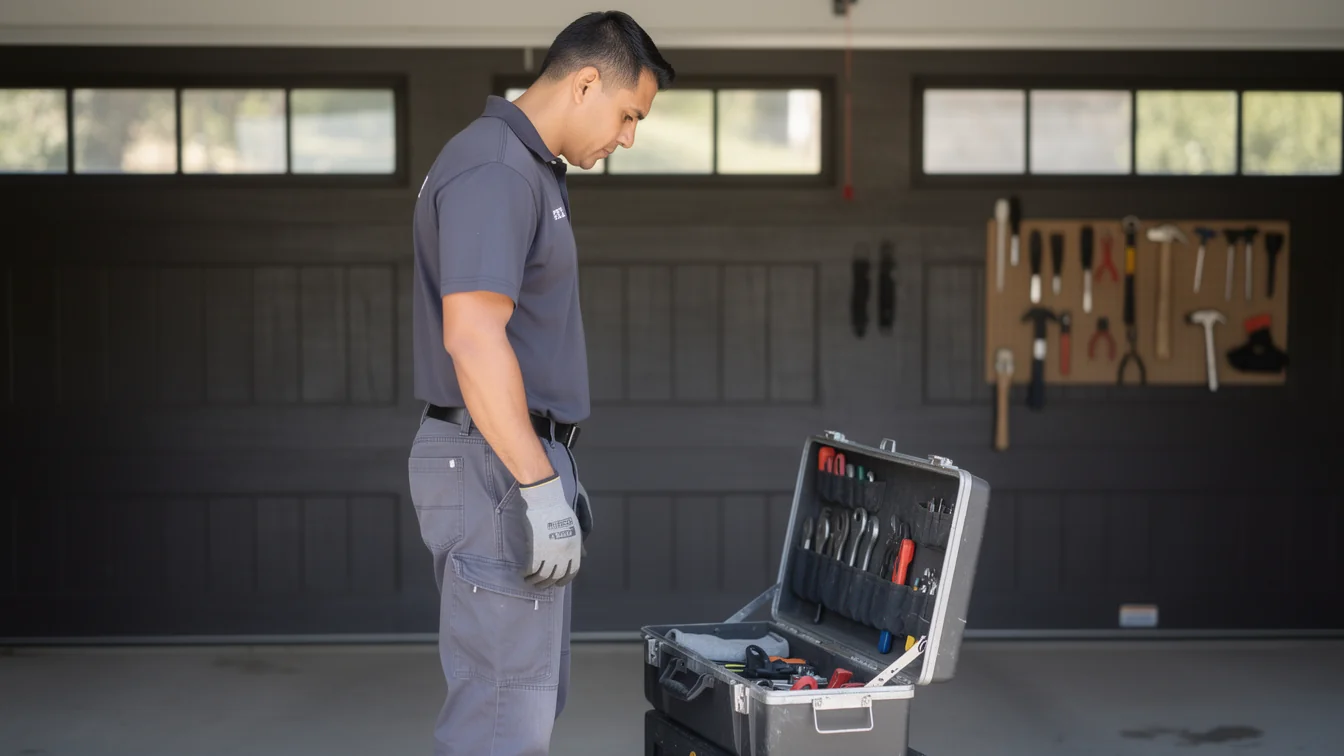
What Happens When You Call Us Out in Ogden
In Ogden, homes built 1971-2009 meet severe cold winters that strain original hardware.
Read moreOgden homes built mostly in the 1980s and 90s, paired with severe cold winters, produce specific door noises. Here's what each one means and when to call.
Local detail
Most houses in this part of the valley went up between 1971 and 2009, with the bulk of the stock dating to the 1980s and 90s across the 29 communities we work in, from South Ogden and Harrisville out to Layton and Brigham City. That means a lot of doors are running original torsion springs and galvanized track that have now sat through three or four decades of this region's cold band. Severe cold doesn't just stiffen grease - it shrinks steel cable by a hair and tightens the coil wind on a torsion spring, which is why a door that was quiet in September starts groaning in December. Panels made from the thinner steel common in that 80s/90s build era also contract more than newer insulated doors, so you'll hear a flat door tick and pop as the sun hits it in the morning after a cold night. None of that is cosmetic. It's metal fatigue accumulating one freeze-thaw cycle at a time, and it's the main reason spring failures around here cluster in the coldest stretch of winter rather than spreading evenly through the year. If your door is from that original build era, the hardware inside it has outlived its warranty by twenty years, whether it sounds bad yet or not.
The area
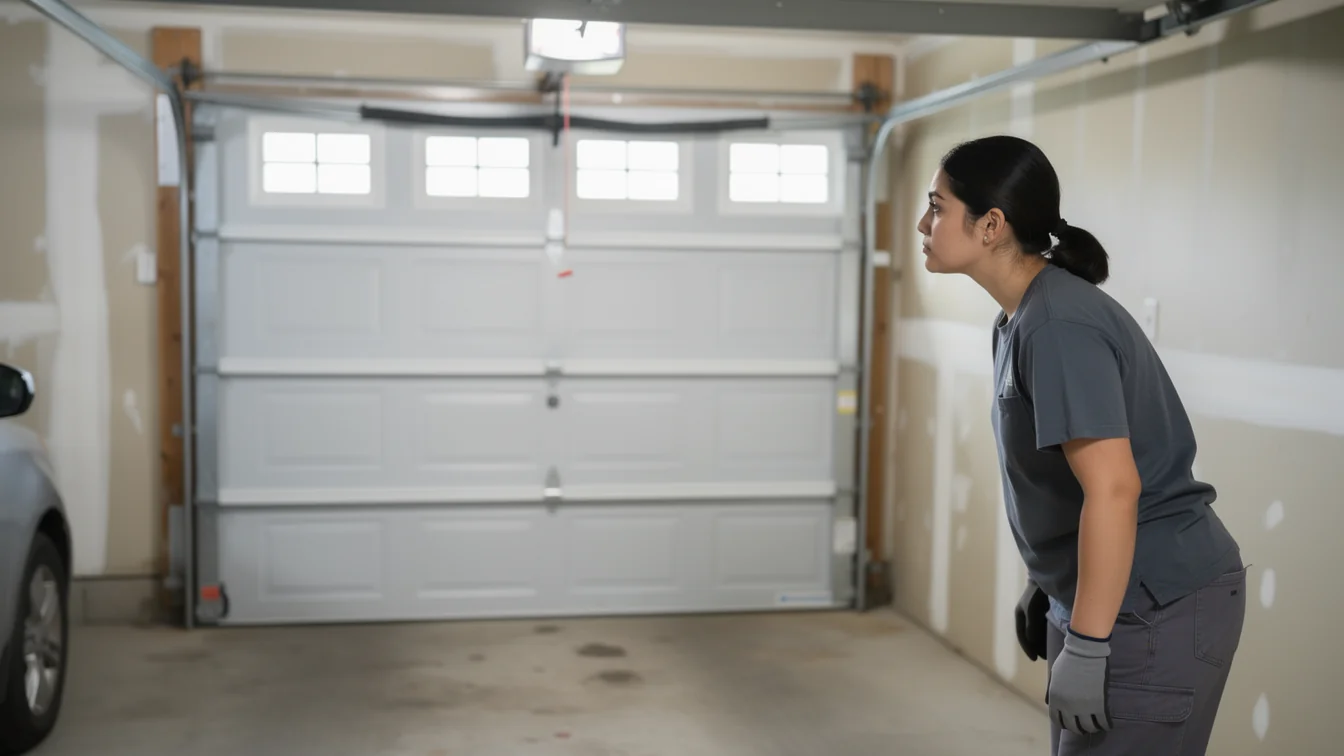
Stand inside the garage with the door down and pull the manual release. Lift the door by hand to shoulder height. If it drops on its own past that point, a spring has lost tension - common in homes from the 1980s-90s stock that never had springs replaced. Next, run the door with the light off and the radio quiet. A rhythmic thunk once per rotation is almost always a flat spot on a roller, not the opener. A sharp metallic ping, especially on a cold morning, is usually a cable strand catching on a frayed section near the bottom bracket - stop using the door if you hear that one. Grinding that gets louder as the door moves is a worn bearing at the end of the torsion shaft, and in this climate the grease in those bearings thickens enough by January that marginal bearings start announcing themselves. Check the hinges between panels for daylight gaps that widen and close as the door travels; that's metal fatigue in a 30-plus-year-old panel, not an opener problem no matter what the remote does.
What we find
The honest problem is that most noise complaints we get in winter aren't the actual failure - they're the warning that preceded a failure by a few weeks. A spring that's starting to lose temper in cold weather will squeal for a while before it breaks outright, and by the time it breaks, it usually takes the bottom bracket or a cable with it. We don't carry parts for every door built in 1975 or 1982; some of that original hardware is long out of production, and matching a 40-year-old track profile sometimes means replacing more than the customer called about. That's a limitation worth saying plainly: if your door is from the earliest part of that 1971-2009 build window, a repair quote may come back larger than expected because we're not patching a system, we're keeping an old one alive a little longer.
How we work
If the noise is new and mild, and you're not hearing metal-on-metal grinding or seeing cable fraying, it's reasonable to wait a season rather than replace the whole door. A lot of households in this income bracket choose to budget for a full replacement rather than keep feeding an original-era door one repair at a time, and that's a fair call too. What isn't fair to the door is ignoring a sound that's gotten louder over two or three cold mornings in a row - that pattern, in this climate, usually means the part is closer to failing than to settling in. Waiting through one more hard freeze is the riskiest version of doing nothing.
Questions
Severe cold tightens torsion springs and shrinks cables slightly, which increases friction on hardware that's already decades old in most homes built here in the 1980s and 90s. The same door often runs quieter again once temperatures climb back up in spring.
Not automatically, but hardware from that era has usually gone 30-plus years without a full spring or cable replacement. In this climate that's well past the point most torsion springs are rated for, so noise at this age is a warning worth checking rather than ignoring.
Lubricating rollers and hinges is fine and helps in cold weather, but it won't fix a losing-tension spring or a frayed cable, and running the door on a failing cable risks the bracket. If the noise is metallic and sharp rather than a dull squeak, skip the oil and get it looked at.
Recommendation
More garage door guides for Ogden homeowners.
In Ogden, homes built 1971-2009 meet severe cold winters that strain original hardware.
Read more
Ogden homes built mostly between 1971 and 2009 face harsh winters that stress garage doors fast.
Read more
Ogden sits in a severe-cold climate band with housing built mostly 1971-2009.
Read moreReady when you are
Ogden Garage Door Pros repairs and installs garage doors, springs and openers in Ogden, UT and the surrounding area.